

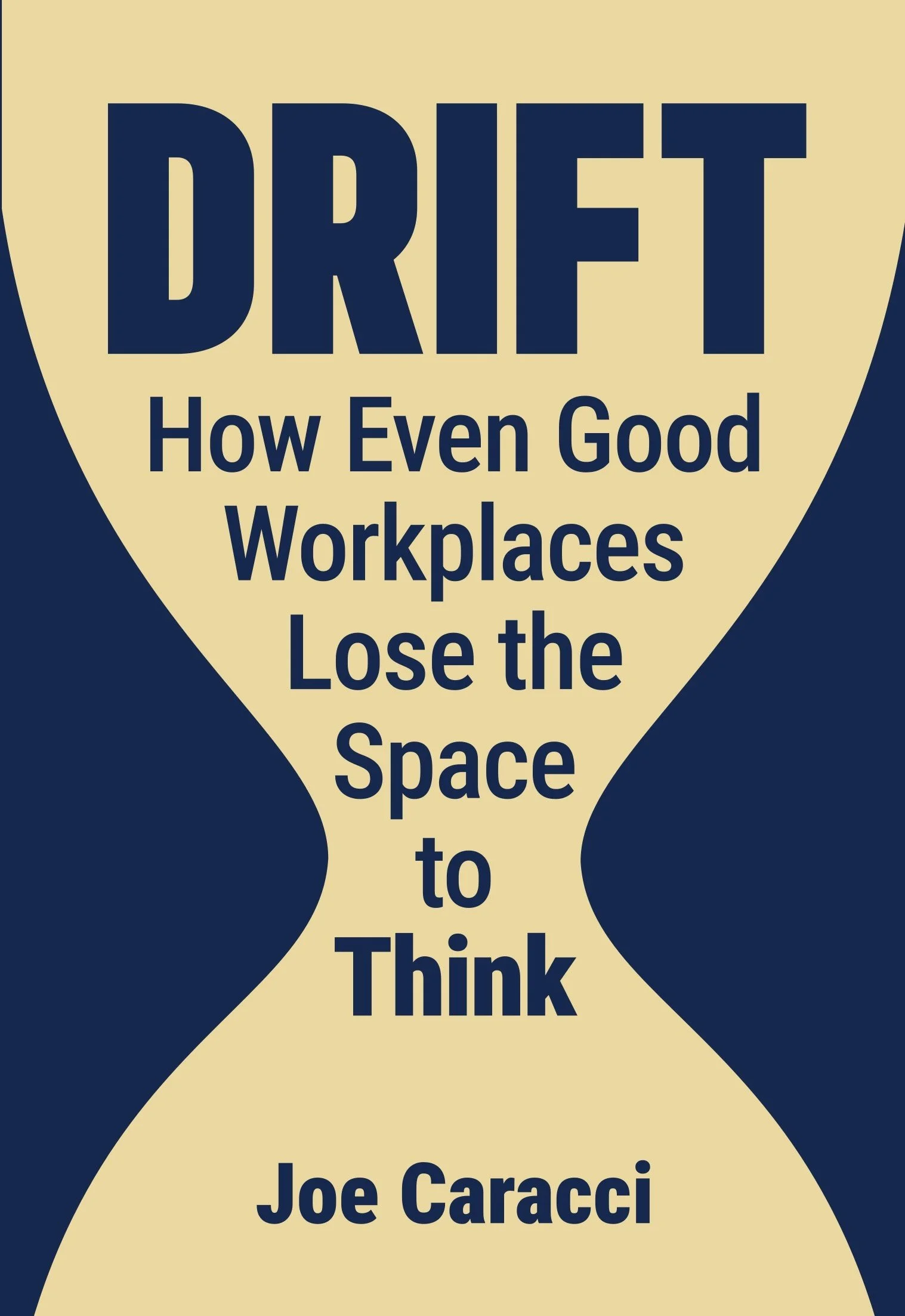
DRIFT
How Even Good Workplaces
Lose the Space to Think
After more than 10,000 interviews following workplace injuries, I kept seeing the same thing: the decision made just before the injury often made more sense once you understood what had been happening around it.
DRIFT explores how pressure, routines, workarounds, leadership signals, and workplace design gradually shape the choices people can access in the moment—and what leaders can change before that moment arrives.
The decision looked sudden.
The drift was not.
Drift rarely announces itself.
A workaround works.
Then it works again.
Eventually, it stops feeling like a workaround.
A shortcut succeeds often enough to feel safe.
A condition people once questioned becomes familiar.
Something that should make people pause becomes simply “how we do it.”
Drift is rarely created by one reckless decision.
It grows through ordinary decisions that seem reasonable at the time.
Knowing what to do is not the same as being able to access it under pressure.
Mental Margin
The space a person still has available to notice, remember, question, and choose clearly as demands rise.
As that margin is consumed, thinking narrows and important information becomes harder to reach.
The Split-Second Gap
The critical moment when risk does not fully register before action occurs.
Pressure, urgency, fear, or habit can narrow what the brain notices—so a danger that looks obvious afterward may never feel obvious in the moment.
The knowledge may still be there. The person may still care.
What changes is what remains available in the moment.
The question is not only: Who made the mistake?
It is also:
What made that decision seem reasonable?
What had become normal?
What pressure was present?
What did the person have to remember, retrieve, endure, or work around?
What had the workplace been teaching before that moment arrived?
Those questions do not weaken accountability.
They make accountability capable of preventing recurrence.
Good workplaces drift too.
Drift does not happen only in indifferent or badly managed organizations.
It happens in workplaces filled with capable employees, experienced supervisors, dedicated leaders, and people who care deeply about the work and the people they serve.
Sometimes caring can even contribute to the problem.
People take on more because others are waiting.
A supervisor tolerates a workaround because the work cannot stop.
A manager postpones a difficult conversation because the department is already under pressure.
Good intentions do not make anyone immune to drift.
They can make it easier to miss.
The workplace has to help good intentions survive contact with the workday.
That happens through design.
Through preparation.
Through realistic expectations.
Through relationships strong enough to support correction.
Through honest reporting and visible follow-through.
Through leaders who stay close enough to the work to understand what people are carrying.
The goal is not a perfect system. Work changes, and drift can return.
The goal is to notice when yesterday’s process no longer fits today’s work—and act before the pattern becomes harm.
Begin with one recurring problem.
Ask what is shaping it.
Change something visible.
Then return to see whether the change held.
Trust grows when people can see that concerns lead to action.
DRIFT is about what happens before the moment.
Pressure, culture, work design, and cognitive wiring can gradually shape what people notice, what they remember, and which choices remain accessible when the moment arrives.
“DRIFT is a thoughtful, humane guide for leaders who want to move beyond blaming people and understand how cognitive wiring, culture, and workplace systems shape decisions under pressure—and how changing the environment can create more space to think.”
— Thom Hartmann
Read the book. Then keep going.
Space to Think at Work continues the conversation through practical ideas, new stories, and ways leaders can begin recognizing the patterns in their own organizations.
Order DRIFT
Available now in Kindle, paperback, and hardcover.
Kindle $11.99 • Paperback $20 • Hardcover $29.99
Ordering 15+ copies for a team or organization?
Discounted direct pricing available.